When AI first transitioned from being a curiosity to being popular for creating artwork, something about it was deeply unsettling. The environmental concerns, the proliferation of data centers, the agressive push to require usage while still playing whack-a-mole with methods to circumvent guardrails, the copyright concerns - all of those were real and more than convincing concerns, but there was also something deeper.
And then I saw this image:
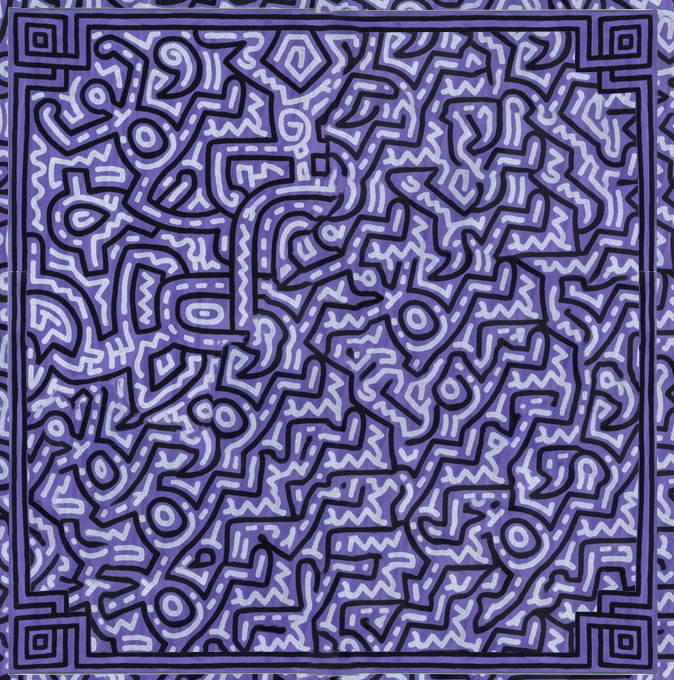
Source link: x.com
And something in me finally understood.
This image was posted by Twitter user DonnelVillager, with the caption:
The story behind this painting is so sad! 😢
Now using AI we can complete what he couldn't finish! ❤️
I find the discussions about whether or not the images AI produce count as art frustrating. There is a feeling that allowing AI art to be called art is equivalent to calling it acceptable. Art can be bad, it can be offensive, it can be morally bankrupt, it can be vapid, it can be "content" more than art. But it is still art. It can still evoke emotions, even if those emotions are anger, disgust, frustration, dealing with the knowledge that another person, another human being just like you, believed this to be acceptable.
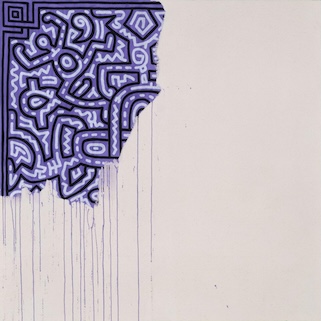
Source link: en.wikipedia.org
.jpg)
This piece evoked a great deal of emotions in me. The original, Unfinished Painting by Keith Haring, is a viscerally powerful piece of artwork. The original is painted on a 1m by 1m square canvas with acrylic paints, which are left to drip and smear below Haring's signature geometric artstyle. There are human figures in the knots of the artwork, but only one is complete. The other two are - as the title of the painting suggests - left unfinished, their bodies bisected by the jagged edge of the completed portion of the painting.
It was completed in 1989.
In 1990, Keith Haring died of AIDS complications.
Keith Haring was one of tens of thousands of predominantly gay men who lost their lives during the AIDS epidemic in the 1980s and 90s. The queer community lost an entire generation. Lives were cut short, and grieving partners were often denied the right to visit their loved ones in the hospital or collect their things afterwards. The response to the epidemic was largely led by homophobia, transphobia, and racism - this was a pandemic among "lesser" people, a punishment for sinful behaviour that made those suffering unworthy of the resources it would take to help.
What would have filled the rest of this canvas if those resources had been offered?
What artwork would have been made? What stories would have been told? What memories would have been made, what lives lived, what would our community be if our elders were still here?
And this is why the image at the top of the page infuriates me. It is such a disrespectful, shallow viewing of the impact of the AIDS epidemic. The loss of life, the loss of community, the confirmation that the duty of care held by institutions and governments is conditional - all of this cannot be felt by an AI. An AI cannot struggle with what it means to live after such wide-reaching loss, to be a member of community that has lost so much and yet continues to exist because what other choice is there? It does not have to decide how much to conform in order to receive the respect and care that ought to be unconditional. It will never sit awake, knowing full well that he is going to die decades before his time, and deciding what to do with those last... months? weeks?
To outsource one's creativity to a statistical model is to rob oneself of the chance to process, express, and share thoughts, emotions, and ideas in the sacred act of creation. You have ideas worth sharing, and you are capable of learning new skills.